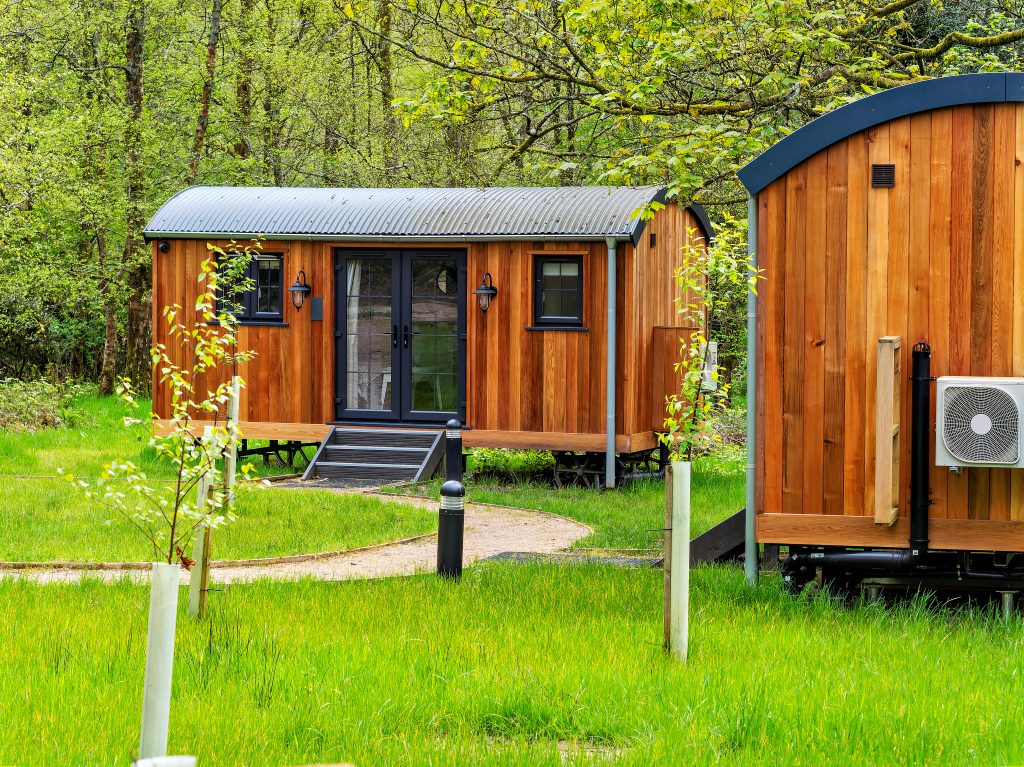
Tiny homes promise freedom and flexibility, but insuring them is rarely straightforward. Depending on its construction, mobility, location, and use, your home might be classified as a traditional house, an RV, a manufactured home, or a specialty structure. Because no single policy fits all, nailing down the right classification is your first step to getting protected.
What Type of Tiny Home Do You Own?
Tiny homes generally fall into several categories.
A tiny home on a permanent foundation may qualify for homeowners or dwelling insurance if it complies with applicable building codes and insurer requirements.
A tiny home on wheels may be classified as a recreational vehicle or travel trailer if it meets certain construction, registration, and certification standards.
A manufactured tiny home may be subject to the federal HUD Code if it is constructed as a manufactured home on a permanent chassis.
A stationary park model may require a specialty recreational, manufactured-home, or dwelling policy depending on its construction and use.
The title, registration, building certification, foundation, utility connections, and occupancy can all affect which policy is appropriate.
What Tiny Home Insurance May Cover
Depending on the type of policy, coverage may include:
Dwelling or physical damage coverage to repair or replace the tiny home following a covered loss.
Personal property coverage for furniture, appliances, electronics, clothing, and other belongings.
Personal liability coverage if someone is injured at the property or you accidentally damage someone else’s property.
Medical payments coverage for qualifying minor injuries to guests.
Loss of use or emergency expense coverage if the tiny home becomes uninhabitable following a covered loss.
Other structures coverage for qualifying sheds, decks, fences, or detached structures.
Collision or transportation coverage for certain tiny homes on wheels while they are being moved, where included.
Coverage While the Home Is Moving
One of the most important questions is whether the tiny home will ever be transported.
A policy that covers a tiny home while it is stationary may not cover damage while it is:
- Being towed.
- Loaded or unloaded.
- Transported by a commercial hauler.
- Temporarily stored.
- Relocated to another state.
- Connected or disconnected from utilities.
If the home will be moved, confirm who provides coverage during transportation and whether a professional hauler is required.
Full-Time Residence vs. Occasional Use
How you use the tiny home can affect eligibility and coverage.
Tell your agent whether the property is:
- Your primary residence.
- A seasonal residence.
- A vacation home.
- A guest house.
- A rental property.
- A short-term rental.
- Used for business.
- Temporarily vacant.
A policy designed for occasional recreational use may not be appropriate for full-time residential occupancy. Similarly, personal coverage may exclude or limit losses connected to rental or business activity.
What’s Usually NOT Covered
Depending on the policy, exclusions may include:
- Flooding.
- Earthquakes or earth movement.
- Normal wear and tear.
- Insects, rodents, or pests.
- Mechanical breakdown.
- Faulty construction or installation.
- Damage during transportation.
- Undisclosed rental or business use.
- Unapproved permanent occupancy.
- Losses occurring at an unapproved location.
Tiny-home owners should pay particular attention to exclusions related to mobility, occupancy, and certification.
Replacement Cost vs. Actual Cash Value
Replacement cost coverage may pay the cost to repair or replace covered property without subtracting depreciation, subject to the policy limits and conditions.
Actual Cash Value coverage generally subtracts depreciation based on the home’s age and condition.
Custom-built tiny homes can be difficult to value because standard replacement-cost calculators may not reflect specialized materials, built-in furniture, solar systems, or custom labor.
Maintain records of construction expenses, upgrades, appliances, and permanently installed equipment.
How Premiums Are Calculated
Insurers may consider:
- Whether the home is stationary or mobile.
- Construction and safety certifications.
- Foundation type.
- Primary or seasonal occupancy.
- Location and weather exposure.
- Replacement cost.
- Heating and electrical systems.
- Whether it is owner-built or professionally constructed.
- Rental or business use.
- Claims history and deductible selection.
Tips for Getting the Right Coverage
- Gather your documents. Keep the title, registration, plans, permits, certifications, receipts, and photographs.
- Disclose how the home is used. Full-time occupancy, rental activity, and mobility should be discussed before the policy is issued.
- Confirm transportation coverage. Stationary coverage may stop when the home begins moving.
- Insure custom features. Solar panels, generators, built-in furniture, and specialty appliances can increase value.
- Verify location requirements. Changing where the home is parked may affect or invalidate coverage.
The Takeaway:
To truly protect your tiny home, look past its size and focus on its build. Your coverage relies completely on certifications, foundations, and how often you travel. Sharing your exact construction details and travel plans with your agent is the smartest way to lock in the right protection and avoid denied claims.
This article is intended for general informational purposes only and does not constitute personalized insurance advice. Policy terms, classifications, coverage, exclusions, and availability vary by state and carrier. Consult a licensed insurance agent regarding your specific situation before making coverage decisions.
Disclosure: AI was used to assist with research for this article. The content was subsequently fact-checked and edited by Stephen G. LaCroix, a licensed insurance agent in all 50 states (CA License #0E67458, NPN 8344418).