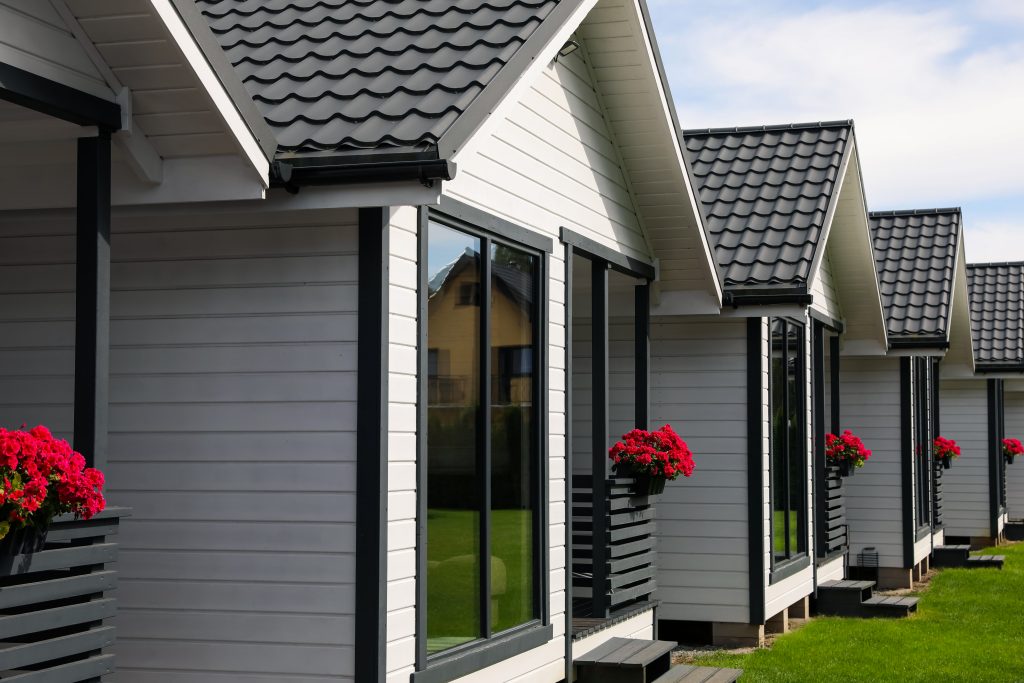
Modular homes are factory-built in sections and assembled on a permanent foundation. Unlike manufactured homes, they must meet the exact state and local building codes of their final destination. This alignment makes them structurally similar to traditional, site-built houses. For insurance shoppers, recognizing this difference is vital, as modular and manufactured homes use completely different policy forms, coverage options, and underwriting criteria
Modular vs. Manufactured Homes
The terms “modular,” “manufactured,” and “mobile” are sometimes used interchangeably, but they do not mean the same thing.
Modular homes are built in factory-produced sections and assembled on a permanent foundation. They generally comply with state and local building codes.
Manufactured & Mobile Homes are built on a permanent chassis under the federal Manufactured Home Construction and Safety Standards, commonly called the HUD Code. They normally display a red HUD certification label on each transportable section. They are towed to a site and placed on temporary piers or blocks. While they are often tied down and skirted, they remain legally mobile and can technically be moved again in the future.
Correctly identifying the home is one of the first steps in obtaining an accurate insurance quote.
What Modular Home Insurance Actually Covers
Because a qualifying modular home is typically treated similarly to a site-built house, it may be eligible for a standard homeowners policy.
Dwelling coverage helps pay to repair or rebuild the physical structure after damage caused by a covered event, such as fire, wind, hail, lightning, or another covered peril.
Other structures coverage protects detached structures such as a shed, fence, detached garage, or freestanding deck.
Personal property coverage helps protect furniture, clothing, appliances, electronics, and other belongings.
Loss of use coverage may help pay for additional living expenses if a covered loss makes the home temporarily uninhabitable.
Personal liability coverage helps protect you if someone is injured on your property or if you accidentally damage someone else’s property.
Medical payments coverage may pay certain minor medical expenses for guests injured on your property, regardless of fault.
Coverage During Construction and Installation
A modular home may face unique risks while its sections are being transported, delivered, assembled, or connected to utilities.
A standard homeowners policy may not automatically cover every stage of construction or installation. Depending on the situation, the builder, transporter, general contractor, homeowner, or lender may need specialized protection.
Before construction begins, ask:
- Who insures the modules during transportation?
- When does the builder’s coverage end?
- When does the homeowners policy begin?
- Is builder’s risk insurance needed?
- Are materials stored at the site covered?
- Who is responsible for installation-related damage?
Get the answers in writing whenever possible.
What’s Usually NOT Covered
Common homeowners exclusions may include:
- Flooding.
- Earth movement or earthquakes.
- Normal wear and tear.
- Gradual deterioration.
- Pest or insect damage.
- Mold, except in limited covered circumstances.
- Sewer or drain backups without an endorsement.
- Poor workmanship or defective construction.
- Damage that occurs before the policy becomes effective.
Separate flood insurance or earthquake protection may be needed depending on location.
Replacement Cost and Rebuilding Value
Your dwelling limit should generally reflect the estimated cost to rebuild the home—not its purchase price, appraised value, or the value of the land.
Modular homes may include specialized components, transportation costs, cranes, engineering, or assembly expenses that should be considered when estimating reconstruction costs.
Ask whether your policy includes:
- Replacement cost coverage.
- Extended replacement cost.
- Ordinance or law coverage.
- Inflation protection.
- Debris removal.
- Coverage for upgraded materials.
Insuring Additions and Improvements
Modular homeowners frequently add garages, decks, patios, porches, solar panels, sheds, or upgraded interior features after the original installation.
Notify your insurance agent after completing improvements so your dwelling and other-structures limits can be updated if necessary.
How Premiums Are Calculated
Insurers may consider:
- The home’s age and replacement cost.
- Construction type and roofing materials.
- Foundation and installation details.
- Location and local weather risks.
- Distance from fire protection services.
- Claims history.
- Coverage limits and deductibles.
- Electrical, plumbing, and heating systems.
- Security and fire-safety features.
Tips for Getting the Right Coverage
- Identify the home correctly. Provide construction documents, permits, certifications, and foundation details.
- Insure the rebuilding cost. Do not use only the home’s market value or purchase price.
- Coordinate construction coverage. Determine who is responsible at every stage of delivery and assembly.
- Review flood and earthquake risks. These are generally not included in a standard homeowners policy.
- Update the policy after improvements. Additions and renovations can increase the amount of insurance needed.
The Takeaway:
Don’t let the factory origin fool you—completed modular homes get the same preferred insurance treatment as traditional, stick-built houses. Just remember that coverage needs to start before the modules arrive on-site. Have an agent analyze your build specifications, replacement costs, and foundation type to safely bridge the gap between a work-in-progress and a fully protected home.
This article is intended for general informational purposes only and does not constitute personalized insurance advice. Policy terms, coverage, classifications, underwriting requirements, and availability vary by state and carrier. Consult a licensed insurance agent regarding your specific situation before making coverage decisions.
Disclosure: AI was used to assist with research for this article. The content was subsequently fact-checked and edited by Stephen G. LaCroix, a licensed insurance agent in all 50 states (CA License #0E67458, NPN 8344418).