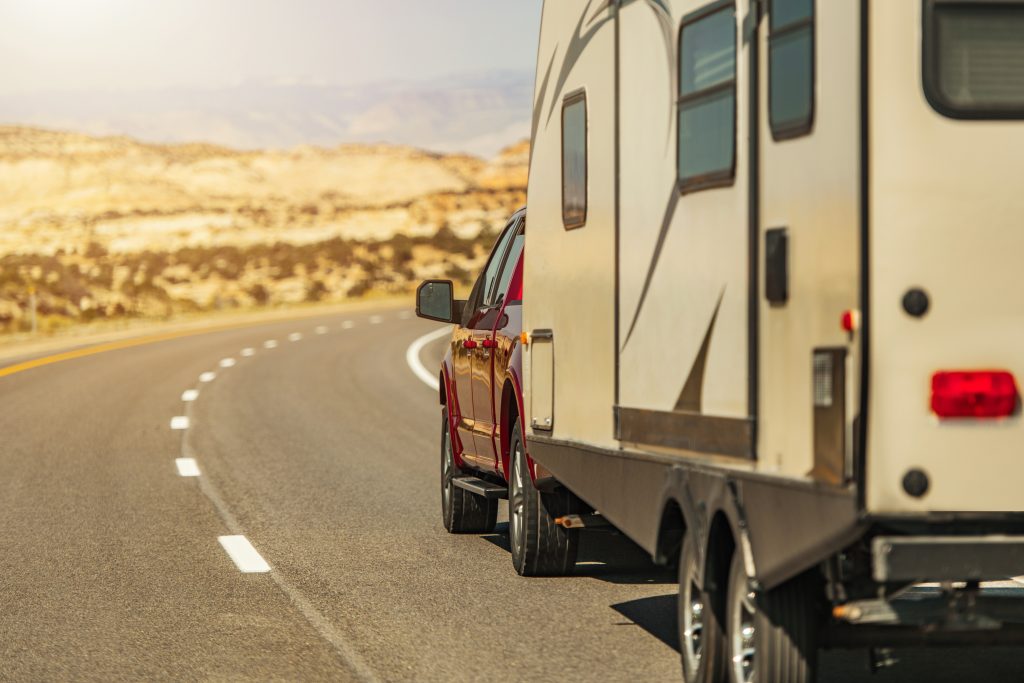
Travel trailers provide many of the comforts of home without having their own engine. However, the fact that a travel trailer is towed does not mean it is fully protected by the insurance policy covering the tow vehicle.
The tow vehicle’s liability coverage may extend to certain accidents involving an attached trailer, subject to policy and state rules. However, damage to the travel trailer itself generally requires separate physical damage coverage.
What Travel Trailer Insurance Actually Covers
A travel trailer policy may include several types of protection.
Collision coverage helps pay to repair or replace the trailer if it is damaged in a collision or overturn, subject to the policy’s deductible.
Comprehensive coverage protects against many non-collision losses, such as theft, vandalism, fire, hail, falling objects, storms, and animal damage.
Personal property coverage may protect belongings kept inside the trailer, including camping equipment, clothing, small appliances, electronics, and household items.
Vacation liability coverage may help protect you if someone is injured in or around the trailer while it is parked and being used as a temporary residence.
Emergency expense coverage may help pay for temporary lodging, meals, or transportation if a covered loss makes the trailer unusable while you are away from home.
Roadside assistance may provide towing, tire service, battery assistance, fuel delivery, or other emergency services, depending on the policy.
Liability While Towing
When a travel trailer is properly attached to an insured tow vehicle, the tow vehicle’s liability coverage may apply if the trailer causes injury or property damage.
However, important limitations can apply. Coverage may be affected by:
- Whether the trailer is listed on the policy.
- The trailer’s weight and type.
- Whether it is used personally or commercially.
- Whether it is properly attached.
- Whether the driver is covered.
- State-specific insurance requirements.
Liability from using the trailer as a residence at a campsite may require vacation liability or another specialized coverage.
Personal Belongings Inside the Trailer
Travel trailers often contain televisions, kitchen equipment, generators, bicycles, camping gear, tools, and personal belongings.
Standard coverage limits may not be enough for expensive equipment. Some belongings may also receive limited protection under a homeowners or renters policy, but deductibles and off-premises limits can apply.
Create an inventory and ask whether high-value items need additional coverage.
Attached Equipment and Upgrades
Notify your insurer about permanently installed or attached equipment, including:
- Solar panels.
- Satellite systems.
- Awnings.
- Generators.
- Upgraded appliances.
- Custom interiors.
- Stabilizing systems.
- Bike or cargo racks.
- Outdoor kitchens.
Aftermarket improvements may not be fully covered unless they are included in the trailer’s insured value or separately listed.
What’s Usually NOT Covered
Common exclusions may include:
- Normal wear and tear.
- Mechanical or electrical breakdown.
- Tire failure without resulting covered damage.
- Rust, corrosion, rot, or gradual water intrusion.
- Damage caused by insects, rodents, or pests.
- Faulty maintenance or improper towing.
- Manufacturer defects.
- Undisclosed permanent occupancy.
- Commercial or rental use.
- Personal property above the stated limits.
Water damage deserves special attention because coverage often depends on whether the damage was sudden and accidental or caused gradually by maintenance issues.
Full-Time and Stationary Use
A standard travel trailer policy may be designed for recreational or occasional use.
Tell your agent if you:
- Live in the trailer full-time.
- Keep it permanently at one location.
- Rent it to others.
- Use it as an office.
- Travel for extended periods.
- Leave it at a seasonal campsite.
Full-time use may require broader liability and personal-property coverage similar to residential insurance.
Actual Cash Value vs. Replacement Cost
Actual Cash Value coverage generally pays the depreciated value of the trailer at the time of a covered total loss.
Replacement Cost or Total Loss Replacement coverage, when available, may provide broader protection for eligible newer trailers.
Ask how the insurer values the trailer and whether taxes, registration fees, custom equipment, or attached accessories are included.
How Premiums Are Calculated
Insurance companies may consider:
- Trailer type, age, size, and value.
- Frequency of use.
- Storage location.
- Claims history.
- Coverage limits and deductibles.
- Full-time or seasonal occupancy.
- Custom equipment.
- Theft-prevention devices.
- The experience and driving history of the tow-vehicle operators.
Tips for Getting the Right Coverage
- Do not rely only on the tow vehicle’s policy. Confirm physical damage coverage for the trailer itself.
- Insure personal belongings. Compare the value of your property with the policy’s limits.
- Disclose full-time or rental use. These activities may require different coverage.
- Inspect the trailer regularly. Roof seams, seals, tires, brakes, and connections require ongoing maintenance.
- Review roadside assistance carefully. Make sure towing limits are sufficient for the size and weight of the trailer.
The Takeaway:
Don’t let your vacation get ruined by a massive coverage gap. Your truck’s insurance won’t pay a dime to fix a dented trailer shell, replace stolen camping gear, or cover a guest who trips at your campsite. To truly protect your home away from home, you need a dedicated travel trailer policy that stands on its own legs.
A licensed insurance agent can help coordinate the policies covering the tow vehicle and trailer so that fewer gaps exist between the two.
This article is intended for general informational purposes only and does not constitute personalized insurance advice. Policy terms, coverage, exclusions, and availability vary by state and carrier. Consult a licensed insurance agent regarding your specific situation before making coverage decisions.
Disclosure: AI was used to assist with research for this article. The content was subsequently fact-checked and edited by Stephen G. LaCroix, a licensed insurance agent in all 50 states (CA License #0E67458, NPN 8344418).